Source Waterproof Wood Grain PVC Decking for Patios, Gardens, and Balconies
Compare 30 listings for waterproof wood grain pvc decking suitable for outdoor patios, gardens, and balconies. Buyers can evaluate features like waterproofing, fire resistance, and installation methods from verified suppliers in Shanghai.
Key considerations
Products List




Comprehensive Sourcing Guide
Strategic Sourcing Guide for Waterproof Wood Grain PVC Decking
Understanding the Product Category and Core Attributes
When sourcing waterproof wood grain PVC decking, buyers must first distinguish between traditional timber alternatives and modern polymer-based solutions. The core keyword implies a material that combines the aesthetic appeal of natural wood with the functional durability of plastic. Based on observed market data, this category frequently utilizes Polyvinyl Chloride (PVC) as a primary base material, often reinforced with wood plastic composites (WPC) to enhance structural integrity. The defining characteristic of this product line is its hydrophilic resistance, ensuring that the material remains impervious to moisture, rot, and insect damage, which are common failure points for natural timber in outdoor environments.
The visual texture is a critical differentiator in this sector. High-quality listings often specify a "Wood Grain" pattern achieved through advanced co-extrusion technologies, such as PVC-ASA co-extrusion, which creates a realistic surface finish. This surface is not merely a printed layer but is engineered to provide a wood texture that mimics the tactile and visual depth of natural lumber. The finish is typically described as "Matt Finish," which serves a dual purpose: it reduces glare in bright sunlight and provides a non-slip surface, a crucial safety feature for outdoor applications. Buyers should verify that the "Wood Texture" is consistent across the entire plank and that the "Color," often observed in shades like Brown, is UV-stable to prevent fading over time.
Technical Specifications and Performance Standards
Evaluating the technical specifications of waterproof wood grain PVC decking requires a granular approach to dimensions, installation methods, and physical properties. The market data indicates a wide variance in product dimensions, with standard profiles often cited as 140mm x 25mm or 200mm x 32mm. However, custom lengths are frequently available, ranging from 2.2 meters to 5.8 meters, or even fully customized to project requirements. This flexibility is essential for large-scale commercial projects where minimizing seams and waste is a priority.
The installation mechanism is another vital technical consideration. Unlike traditional decking that requires nailing or screwing directly into the board, many modern PVC and WPC products utilize a "Clips" system for installation. This hidden fastening method not only creates a cleaner aesthetic but also allows for thermal expansion and contraction without compromising the structural integrity of the deck. The product attributes explicitly mention "Install Easily," suggesting a user-friendly design, but the specific compatibility of the clips with the joist spacing must be verified against the supplier's technical drawings.
Performance claims in this category are robust. The material is consistently described as having "Waterproof" and "Fireproof" capabilities, alongside "Anti-Slip" and "Abrasion Resistance" features. The "Hydrophilicity" is noted as "Water-Proof," confirming that the material does not absorb water, thereby preventing swelling or warping. For buyers, it is imperative to request specific test data regarding fire ratings and slip resistance coefficients, as these are critical for compliance in public spaces and residential areas with strict safety codes. The "Single Package Size" varies significantly, from compact 30x20x10 cm units to larger 50x140x2.5 cm packages, which directly impacts shipping logistics and handling requirements on-site.
Compliance, Certification, and Environmental Standards
Navigating the regulatory landscape for outdoor decking is essential for international procurement. The most frequently observed certification in this sector is the CE mark, which indicates conformity with health, safety, and environmental protection standards for products sold within the European Economic Area. Some suppliers also list additional credentials such as ISO certifications or Intertek verification, which can serve as third-party validation of the manufacturer's quality management systems. However, buyers must exercise caution and verify the specific scope of these certificates, as the presence of a generic "CE" or "ISO" mention does not automatically guarantee that every SKU in a supplier's catalog meets the specific environmental or fire safety standards required for a particular project.
Environmental compliance is increasingly a deciding factor in procurement decisions. The raw materials are often described as "Eco-Friendly PVC Material," and the products are marketed as sustainable alternatives to natural timber. While the term "Eco-Friendly" is common, buyers should look for specific data on the recyclability of the material and the absence of harmful volatile organic compounds (VOCs). The "Environmental Standard" is often listed with functional descriptors like "Waterproof" and "Anti-Static," but buyers should seek explicit references to recognized environmental protocols, such as low-emission certifications or specific chemical composition reports, rather than relying solely on marketing terminology.
It is important to note that while some background information may suggest FSC (Forest Stewardship Council) certification, this is not a confirmed attribute for the specific PVC products listed, as the material is synthetic. Instead, the focus should be on the "Environmental Standard" related to the manufacturing process and the end-of-life disposal of the PVC material. Buyers should request a Material Safety Data Sheet (MSDS) and a declaration of compliance with local building codes regarding fire ratings and chemical leaching.
Cost Drivers and Pricing Structures
The pricing structure for waterproof wood grain PVC decking is influenced by several variables, including material composition, profile complexity, and order volume. The observed price range in the market spans from $1.50 to $990.00 USD, a vast disparity that reflects the difference between single-item samples, small residential orders, and bulk industrial shipments. The lower end of the spectrum typically represents basic profiles or sample units, while the higher end often includes custom-engineered solutions, specialized coatings, or large-volume palletized orders with complex logistics.
Minimum Order Quantity (MOQ) is a significant cost driver. Data indicates an MOQ range of 1 to 4,000 units, with a specific high-confidence observation of 300 square meters for standard orders. This threshold can significantly impact the unit cost for smaller buyers. Suppliers with lower MOQs may charge a premium per square meter to cover setup and handling costs, whereas buyers committing to the 300-square-meter threshold or higher can often negotiate more favorable pricing tiers. The "Supply Ability" of 50,000 meters per week suggests that large suppliers can accommodate substantial orders without significant delays, but buyers must confirm if this capacity applies to their specific custom requirements.
Additional cost factors include the "Project Solution Capability." Suppliers offering "Total Solution for Projects" or "Graphic Design" services may bundle engineering, installation planning, and after-sales support into the price, potentially offering better value than a transactional purchase of raw materials. The "Payment" terms, often cited as T/T (Telegraphic Transfer), also influence the financial planning of the procurement process. Buyers should clarify whether the quoted price includes packaging, such as "Carton or Pallet," and if there are additional charges for "Customized Package" requirements, which can affect the final landed cost.
Typical Applications and Design Integration
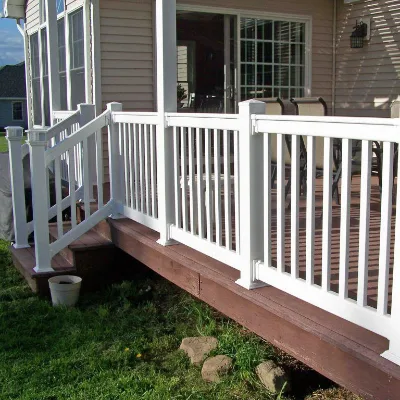
The versatility of waterproof wood grain PVC decking makes it suitable for a wide array of applications, primarily driven by its "Outdoor" usage classification. The material's resistance to moisture, UV radiation, and temperature fluctuations allows it to perform reliably in harsh environments where traditional wood would degrade. Common applications include residential patios, pool decks, boardwalks, and commercial rooftop terraces. The "Style" of the product, ranging from "Classic" to "Modern" and "European," allows designers to integrate the decking into various architectural contexts without compromising on durability.
The "Design Style" is often a key selection criterion. The "Wood Grain" pattern provides a warm, natural aesthetic that blends seamlessly with garden landscapes, while the "Matt Finish" ensures a sophisticated look that does not reflect excessive light. For commercial projects, the "Project Solution Capability" becomes even more relevant, as suppliers may offer "Total Solution" packages that include custom color matching, specific profile designs, and installation planning. The availability of accessories such as "Clips, WPC Joist, Skirting, and Screws" ensures a cohesive system where all components are designed to work together, reducing the risk of compatibility issues during installation.
The "Timers Type" being listed as "Composite" suggests a hybrid approach where the material is engineered to withstand long-term exposure to the elements. This makes it ideal for high-traffic areas where durability is paramount. The "Feature" set, including "Waterproof" and "Fireproof" capabilities, expands the potential applications to include covered areas, balconies, and public spaces where fire safety regulations are strict. Buyers should ensure that the selected product's design style and technical features align with the specific environmental conditions and usage patterns of the intended site.
Supplier Evaluation and Quality Control Protocols
Selecting the right supplier requires a rigorous evaluation process that goes beyond price comparisons. The "Location" of the manufacturer, often cited as Shanghai, China, provides insight into the supply chain dynamics and potential lead times. Buyers should verify the supplier's "After-Sale Service" capabilities, with "Online Technical Support" being a standard offering. This support is crucial for troubleshooting installation issues or addressing product defects that may arise after delivery.
Quality control should be a central part of the supplier evaluation. Buyers must request samples to verify the "Wood Texture" and "Color" consistency, as well as the "Matt Finish" quality. It is essential to confirm that the "Material" is indeed "Eco-Friendly PVC Material" or "Wood Plastic Composite" as claimed, and to check for any inconsistencies in the "Single Package Size" or "Packing" details. The "Certificates" such as CE, ISO, and Intertek should be verified for validity and relevance to the specific product model, such as "HD-01" or "HS-02."
The "Installation" method, specifically the use of "Clips," should be demonstrated or documented by the supplier to ensure that the system is robust and easy to use. Buyers should also inquire about the "Process" used, such as "PVC-ASA Co-Extrusion," to understand the manufacturing depth and the potential for long-term color stability. A reputable supplier will provide detailed technical data sheets, installation manuals, and warranty information that covers the "Product Performance" aspects like "Abrasion Resistance" and "Anti-Slip" properties.
Long-Term Procurement and Lifecycle Considerations
For long-term procurement success, buyers must consider the lifecycle costs of the decking, not just the initial purchase price. The "Waterproof" and "Fireproof" features of PVC decking significantly reduce maintenance costs compared to natural wood, which requires regular sealing, staining, and repairs. The "Anti-Static" and "Anti-Slip" features also contribute to long-term safety and reduced liability risks. The "Supply Ability" of 50,000 meters per week indicates that suppliers can support future expansion or replacement needs without significant lead time delays.
Buyers should also evaluate the "Customization" options available. The ability to order "Customized" lengths, colors, and packaging can streamline the installation process and reduce waste. The "Project Solution Capability" for "Graphic Design" suggests that suppliers can assist with visual planning, ensuring that the final product meets the aesthetic expectations of the project. Finally, the "Payment" terms and "MOQ" flexibility should be negotiated to align with the buyer's cash flow and project timeline, ensuring a sustainable partnership that supports the long-term success of the decking installation.
FAQs
What material is used for waterproof wood grain pvc decking?
The decking is primarily made from Eco-Friendly PVC Material or Wood Plastic Composite. This composition ensures the product remains waterproof and fireproof while mimicking the aesthetic of natural wood grain.
How is the installation process handled for this decking?
Installation utilizes a clip system for easy assembly without direct nailing. This method allows for thermal expansion and creates a clean look, though specific clip compatibility should be verified against joist spacing.
Which certifications are available for these waterproof wood grain pvc decking products?
Products typically carry CE certification and may include ISO or Intertek verification. Buyers should request specific test data to confirm fire ratings and slip resistance for their specific project compliance needs.
Can buyers customize the dimensions and packaging of the decking?
Yes, customization is available for lengths ranging from 2.2m to 5.8m or fully custom sizes. Packaging can also be customized, with options including cartons or pallets depending on the order requirements.
What is the minimum order quantity for purchasing this decking?
The standard minimum order quantity is 300 square meters, though ranges from 1 to 4000 units exist. Orders below the standard threshold may incur higher per-unit costs to cover setup and handling fees.
Where are the manufacturers of this decking located?
Manufacturers are located in Shanghai, China. This location influences supply chain dynamics and potential lead times, so buyers should verify current production capacity and shipping schedules for their specific order.